Lets’ start off with a scenario!
Imagine a family is quarreling about what to watch on the television. Daddy wants to watch basketball game so as to not feel left out when his colleagues are chatting about it. Mummy wants to watch Korean drama to be able to spark more conversation with her daughter, Jane. Jane however wants to watch NAT GEO wild to gain more background knowledge about wild animals for her project. Eight-year-old Zen throws a tantrum for his favorite Sponge-Bob Square-pants because is his source of entertainment.
Based this scenario, it shows and explain why each member in the family want to watch the television. This brings us to the theory of ‘uses and gratifications’ to understand why people select specific type of media and the content that they want. There is always a reason behind a choice made and for this theory the reason is to satisfy one’s psychological needs. This theory thus argues about why and what people uses media as oppose to what the media does to people.
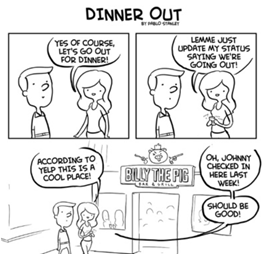
Types of psychological need
1. Cognitive needs
Media is a platform for people to gain more knowledge, information and knowing more facts about the world. Some people may seek media for help to gain more academic knowledge to aid in their school projects or assignments. For example, when I was in secondary school, I had a project where I have to familiarize with a news and report it in my own words. Hence, I watch the channel 8 news to get to know what interesting news are there and also study the way how news reporter report.
2. Affective needs
People make use of the media and chooses the content that they want to read or watch to get certain emotions. Hence, affective needs are about emotions and feelings such as pleasure, happiness or even fear. For example, I went to watch a Korean movie called ‘The Battleship Island’ with my friends which made us cry so much during a sad scene.
3. Personal integrative needs
People uses the media to upgrade their own status and reputation and to improve on their own image. This need is related to one self-esteem. For example, while watching television there are advertisements related to makeup and fashion clothing which makes the audience buy the product so as to have the same lifestyle as how the media portrays.
4. Social integrative needs
Media has become part of the interaction with family, friends, colleagues and the society. Instead of being social with people, the society now has become more reliance on social media such as Instagram, Facebook and Twitter to satisfy their needs. In addition, recalling the scenario I have written, the father watches basketball game so as to have something in common to chat with his colleagues. Reason being he does not want to feel left out in his colleagues’ conversation; hence he starts watching basketball game despite not being his interest.
5. Tension free needs
Due to the stressful and tiring environment people are studying and working in, most people would want to escape from the reality world for a while. Therefore, most people make use of media to help them feel less stressful tense from the reality world. For example, some people would watch shows on Netflix, scroll through social media, watch the television or listen to broadcast. However, this depends on the individual. For example, after a long day at work my boyfriend would play online games to make himself feel more relax whereas for me playing game makes me more tense. Hence, I would prefer watching some YouTube Channel relating to food and travelling to escape from the reality world. How the media bring one to escape from reality thus is specific for every individual.

What are ‘Lobby’ groups?
You must be wondering what does ‘Lobby’ means right? Let me enlighten you. ‘Lobby’ means to persuade groups or individuals whom have the power to make decision to support your point of view or what you believe in to achieve favorable outcome. Usually lobbying is used on people with power to support those who lacks power in making decision.
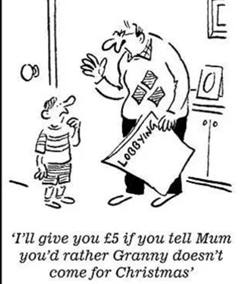
Different types of lobbying:
Direct action
This means directly dealing with the people with the power to make the decision, via speaking to convey the objectives you would like to achieve. For example, of a direct lobbying for tax rates, business contact the government whom are the ones controlling tax rates to open up on the tax rates they want to imposed and the reason for it.
Indirect action
This is the opposite of direct action where one indirectly tries to persuade the decision-making party, which means one is not directly involved. In addition, indirect action can also mean to not state their aims when influencing the decision-making party. For example, a business can aim to change the point of view of the public instead of contacting the government. The public’s opinion thus can influence the government decision.
In the US Constitution, the First Amendment protects the right to lobby. The right to lobby is often overlooked with all the rights protected by the First Amendment.
An example of lobbying is by the Pharmaceutical Research and Manufactures of America, PhRMA. The drug makers aim to use the media such as advertisement to solve their drug pricing problem. President Trump has expressed his thoughts that the pricing of drugs is not acceptable and the government need to negotiate the pricing. President Trump also suggest to import drugs from other countries to decrease the pricing of drugs. However, instead of importing PhRMA requested for more budget to introduce the campaign “Go Boldly”. This campaign aims to raise attention on the new medicine invention and new medical methods to treat cancer. This is so as so divert the attention of the public away from the increasing in drug pricing.
The first advertisement of the campaign “Do Not Go Gentle into That Good Night”.
https://www.youtube.com/watch?v=VA–ZEJLoH8&feature=youtu.be
Through this advertisement, it shows the research officer in the laboratory and images of patients and cells. They are trying to convey a message to patients and the public that they are not alone fighting diseases that they are diagnose with, the researchers and scientists are also fighting with them to help improve life of patients. In hope to divert their attention to how the researchers and scientists are helping them instead of focusing on the high pricing of drugs.
This is the end of my third blog. Thank you for taking your time to read. Hope you enjoyed reading.

Yu Ning 🙂
 Yu Ning's blog
Hey Yu Ning.
I like how you start your post with a scenario which makes it more interesting and gives a clearer picture on the reasons why different people have different gratifications. The examples that you have given for each of the needs makes me understand the need much better. Just like you, to satisfy my tension free needs, I too watch YouTube videos sometimes to escape from the reality for a while. You have also stated the different types of lobbying, which gives a better background on lobby groups. Your choice of lobbying is interesting as it is a relatable issue in the present. Enjoyed reading your insightful post.
Thila (:
LikeLiked by 1 person
Hey! Your blog is really neat and I like the idea of having a scenario, right at the start, making it stand out from the other blogs I have read so far. The scenario is a common situation and relatable in almost every household. The explanation and personal experiences given for the theory of ‘uses and gratifications’ is straightforward and easily understood. From this blog post, I learnt that there are different types of lobbying: direct and indirect actions. Direct actions would be stating something upfront, letting the audience know that your specific wants and needs. On the other hand, indirect actions would be to state the benefits of a specific point and persuade the audience to take the same point of view. The example of lobbying is truly an eye-opener for me and it made me realised that analysing a context at the denotation, connotation and mythic level is important.
LikeLiked by 1 person